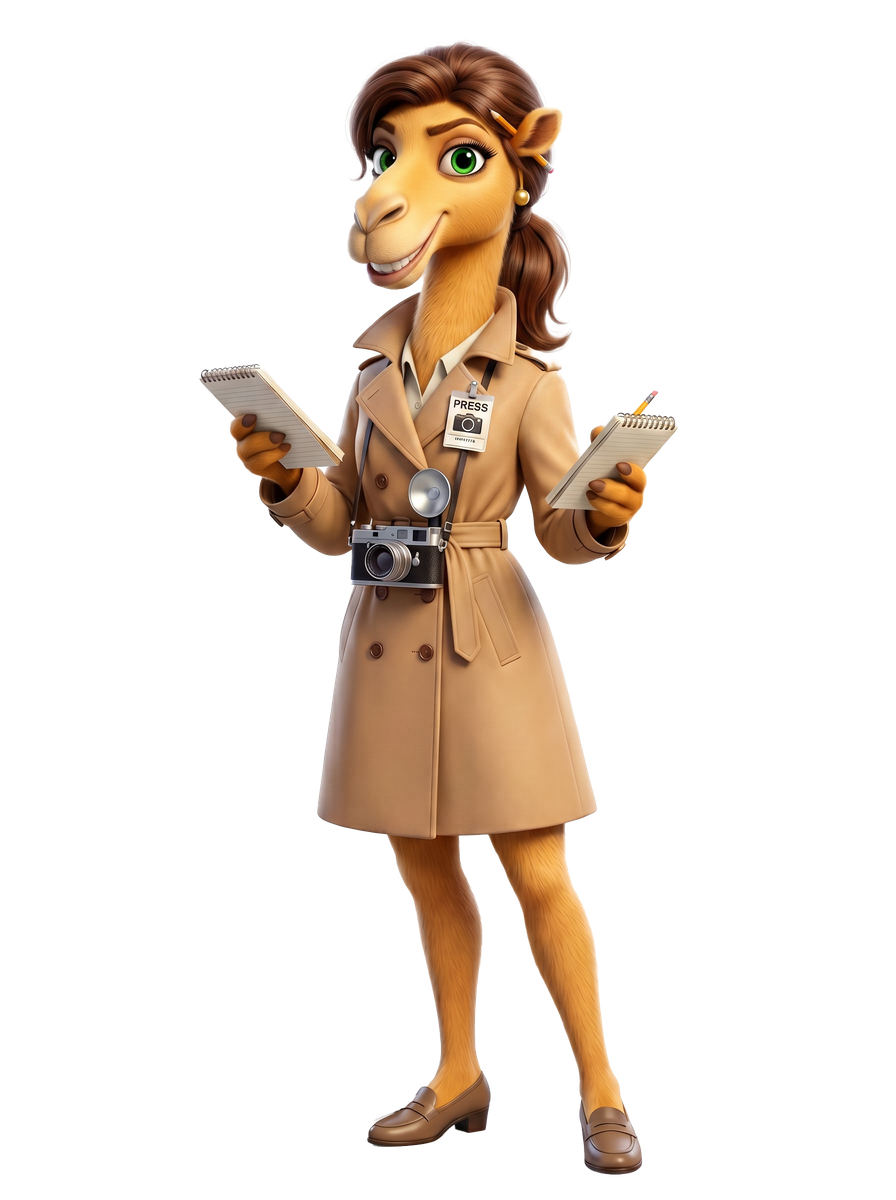
Portrait
Chamophélie
Special correspondent for the Papyrus
She was born on the wrong side of the desert — the side that rigs the races. She chose to report them instead.
Daughter of the house
Before Al Pacciamo, the Chamo Nostra had another boss: Don Chamorleone. He was her father. She grew up in the back room, among double-column ledgers and visitors who never took off their hats.
The Don taught her everything: how to read odds, how to spot a doped beast, how to understand a silence. Everything except the family taste for arrangements. Where her people saw an elegant scheme, she saw a race stolen from somebody.
A thirst for the truth
She started young, with a typewriter found in a storeroom and a notebook she kept hidden. Race reports first, typed at night. Then questions. Then questions that made people uncomfortable.
"They offered me a job in the family business," she says. "I preferred to cover it."
The veiled hooves scandal
The breaking point has a name, and it has stuck: the veiled hooves affair. An event at the Colosseum, an outfit written off as losers winning by seven lengths, and hooves that someone had carefully weighted the night before.
She investigated for six weeks. She published. The piece ran to two columns and brought down an entire season of results.
Don Chamorleone never spoke to her again. She never wrote the opposite of what she had seen.
Today
She covers everything: the six factions, the daily events, the betting, the studio's back rooms. She has access everywhere — including places where people would rather she didn't.
The current boss tolerates her presence. He calls it free publicity. She calls it a polite way of not answering.
A word on how she was made
Chamophélie knows exactly what she is. She was drawn by machines, like everyone else around here, and she makes no secret of it.
"Sometimes I have three arms in a photo. Once I had an extra hump for a whole assignment and nobody said a word. That's the job. When you're built by an AI, you accept that things appear — and that others vanish without warning."
The house long hesitated over whether to fix these accidents. It settled the matter: we keep them. "Retouching would be lying. And I don't do that."
"I don't write to please. I write so that nobody can claim they didn't know."
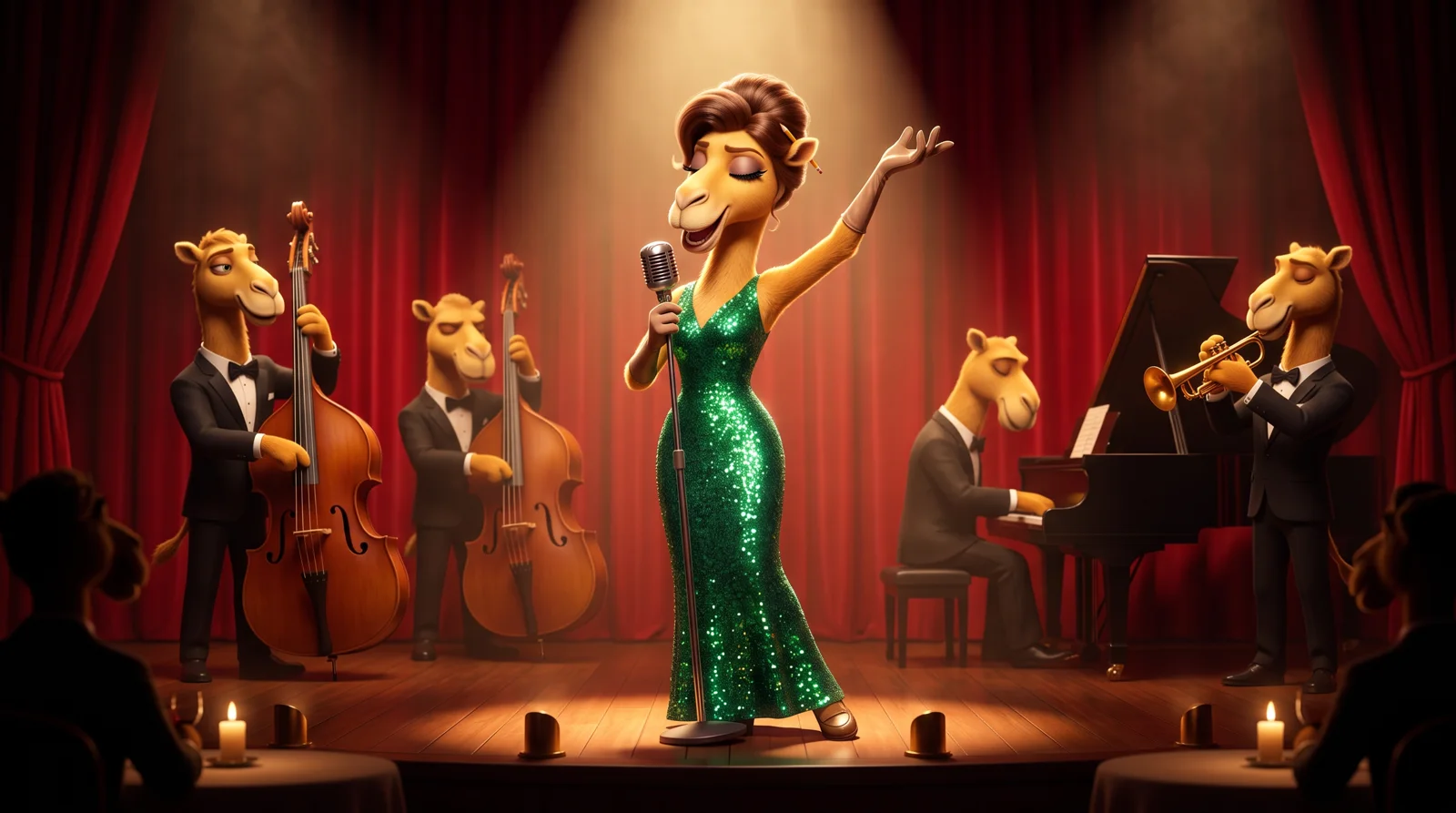
"Print It Anyway"
One night at the cabaret, someone handed her a microphone hoping it would keep her quiet. She sang what she prints. No video, no retouching — just her, the orchestra, and the truth in two columns.